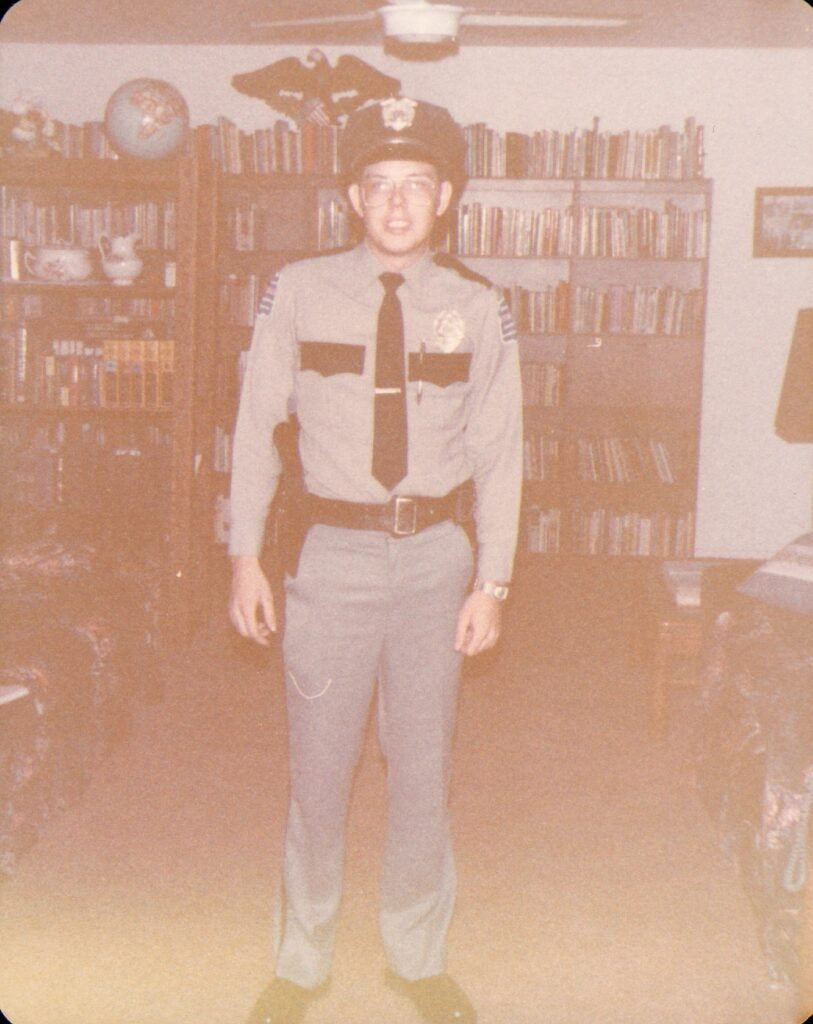
When I was nineteen years old, I lived in a small trailer in Phoenix, Arizona with my brother. We were both trying to build a life after leaving our parents’ home. He worked at Circle K, and I attended Bible school during the day while working nights as a mobile armed guard. We didn’t have much, but at nineteen, you don’t spend much time thinking about what you lack. You’re too busy imagining what comes next.
My job took me all over the city. I checked businesses after hours, patrolled properties, escorted people and payrolls, while also responding to security concerns. Looking back, I realize I was little more than a kid carrying adult responsibilities. Fortunately, I never encountered a situation that required me to use the weapon I carried.
At the time, I carried a new Dan Wesson .357 Magnum revolver. I loved that gun. I had always been a good shot and had to qualify before being hired. I still remember the pride I felt when I shot a perfect score. I also remember taking a polygraph examination. The examiner seemed amused when I admitted that I had once stolen a pack of gum when I was five. Most people wouldn’t have mentioned something so small. Yet it still bothered me, and I wanted to answer honestly. He was also surprised that I had never used alcohol or drugs.
One of my regular assignments involved checking on the home of Barry Goldwater. For younger readers, Goldwater was one of the most influential political figures of his era. He served as a United States Senator from Arizona and came within reach of the presidency. To a nineteen-year-old kid from Kentucky, it seemed remarkable that I would find myself walking around the property of someone whose name was known across the world.
The home itself was impressive. It overlooked Camelback Mountain and contained things that caught the attention of a young man. I remember seeing a beautiful Frederic Remington bronze sculpture in the living room. Sometimes there were guests gathered around a large coffee table. Occasionally, I would catch glimpses of people whom I assumed were important. There was an air of success and accomplishment about the place that fascinated me at the time.
I also remember the Scottish terrier named Cyclone who greeted me on some of my visits. Like most dogs, he seemed completely unimpressed by status or politics. He simply wanted a little attention from whoever happened to be nearby, and he was probably a better guard than I was.
What strikes me today is how memory works. If you had asked me at nineteen what I would remember forty years later, I probably would have pointed to the revolver, the famous senator, the artwork, the home, or the important guests. Those were the things that impressed me. Those were the things that seemed significant.
Yet that is not what I remember most clearly. What remains strongest in my mind is Mrs. Goldwater. She was often frail and struggling with her health. Many evenings, she was resting while being cared for by her housekeeper and those around her. While her husband was known throughout the world, she was facing something much more personal. She was confronting the realities of illness, dependency, and the vulnerabilities that eventually visit every family.
At nineteen, I don’t think I fully understood what I was seeing. Today I do.
History remembers the speeches, elections, accomplishments, and public victories. History books tell us about campaigns and legislation. Yet most of life happens somewhere else. It happens in living rooms, kitchens, hospital rooms, and bedside chairs. It happens in the quiet moments when people care for one another. It happens when a spouse worries about a loved one. It happens when a housekeeper offers assistance to someone who can no longer do everything for herself.
The older I get, the more I appreciate those moments. After decades as a counselor and educator and observer of people, I have come to understand that the most important parts of life rarely make the headlines. The moments that shape us are often the ones that happen far away from public attention. They occur in ordinary acts of kindness, in caregiving, in loyalty, and in the simple decision to remain present when someone needs us.
It is funny how memory edits our lives. It quietly removes some things and preserves others. The revolver is mostly a footnote now. The Remington sculpture has faded somewhat. Even the celebrity of Barry Goldwater occupies less space in my memory than it once did.
What remains are images of humanity and a spunky little dog waiting to be petted. A housekeeper caring for someone in need and a husband navigating the illness of his wife. And finally, a young security guard beginning to understand, without realizing it, what truly matters.
Perhaps memory is wiser than we are. It has a way of preserving the lessons we need while allowing the rest to slowly fade into the background.
Dr. Wesley