We have deer everywhere. Every morning and evening, Dawn and I can sit on the front porch with our Coke Zero and watch them moving through the woods. We catch them on our cameras at all hours, grazing, wandering, sometimes standing still as if posing for us. They’re beautiful creatures, and I enjoy seeing them. That is, until they get into the garden. Then they become a different story.
They’ve eaten our vegetables, stripped my mom’s roses bare, and turned our hostas into an all-you-can-eat buffet. Around here, deer are thick. There are so many that it’s hard to imagine a time when they were rare.
But my mom and dad told me that when they were growing up in rural Kentucky, seeing a deer was almost unheard of. The same was true for my grandparents. People would talk about them like they were ghosts, elusive creatures hidden deep in the hills. Why? Because back then, a deer wasn’t something you admired from the porch. It was food.
In the early part of the twentieth century, Kentucky families would have been glad to bring down a deer, not for sport, but because it meant meat on the table. It meant survival. Sure, one could find scrawny squirrels for a fried squirrel brain lunch, but a deer could mean getting through the winter. When people lived closer to the edge of necessity, they saw the world differently. Everything had value. Everything had purpose.
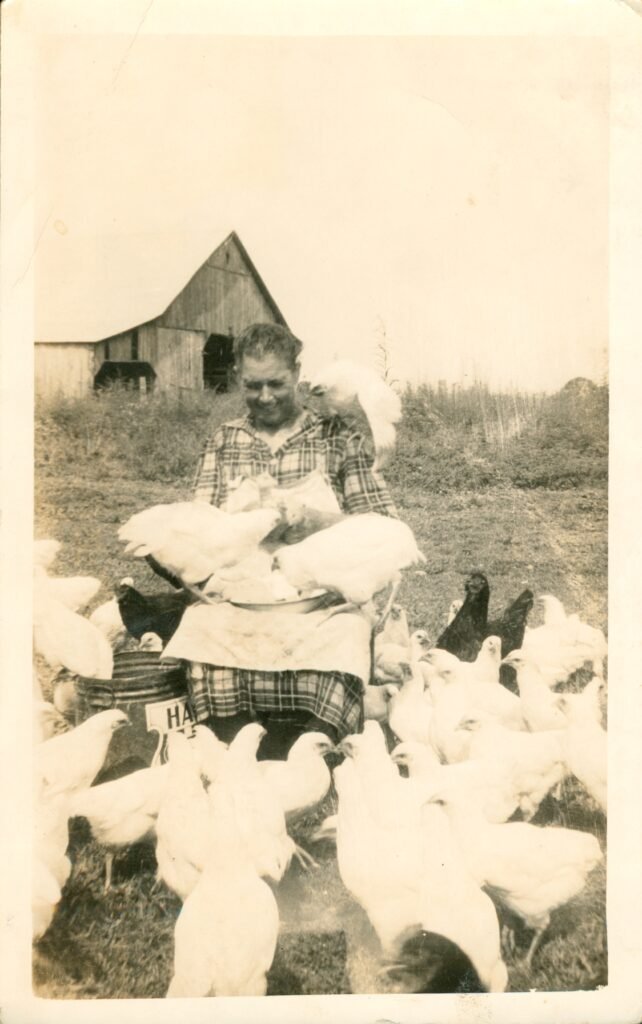
My great-grandmother, Grace Droste Martin, sold eggs from her chickens and traded them for what she needed. (check out the picture of her with her chickens) My grandfather gathered black walnuts, cracked them on an old stump, and sold the kernels in little jars. People bartered, traded labor, and shared what they had. A dozen eggs could mean flour. A day spent helping a neighbor might mean help when your roof leaked. There was no waste because waste was a luxury. Even as a kid, I remember trading whatever I had, turtles, snakes, baseball, or Wacky Packages trading cards such as Captain Crud, anything, for something I wanted. It was my own little economy, and it taught me early that value isn’t always found in money.
I think about that now when I hear people talk about scarcity. Maybe part of our problem today is not that we lack enough, but that we have forgotten how to use what we have. We’ve traded skills for convenience. We’ve traded gardens for grocery aisles, home-cooked meals for fast food, and self-reliance for dependency.
I grew up on beans and cornbread. Cheap, simple, filling, and brought the family together. It fed us well and kept us warm at night! My mother and grandmother could take very little and make a meal that brought everyone to the table. And when supper was served, that was supper. You ate it, or you went without. There was respect in that. Respect for the work, for the food, and for the person who made it.
Maybe that’s why I look at these deer differently. To me, they’re not just a nuisance in the garden or pretty creatures in the yard. They’re a reminder of how much life has changed. A reminder of a time when survival required effort, creativity, and gratitude.
We have more now than our grandparents ever dreamed of. But I’m not sure we always appreciate it more.
Dr. Wesley