Years ago, I worked as a mental health crisis counselor on a mobile crisis team. I loved that job. It was fast-paced, unpredictable, and emotionally intense. Police officers, hospitals, schools, families, and emergency dispatchers would call us when someone was threatening suicide, spiraling into psychosis, or emotionally collapsing in front of the people around them. I was the primary therapist on the team, usually paired with a bachelor’s-level support staff member, and we drove from crisis to crisis like a mental health emergency room on wheels.
Some nights were quiet, but some nights we were talking people out of ending their lives. Other nights, we were sitting quietly on porches with exhausted families who had no idea what to do next. There were psychotic breaks, panic attacks, domestic fights, hostage situations, overdoses, and endless tears in kitchens and living rooms across the Phoenix Metro area.
And sometimes we encountered clients who cut themselves. Not all of them wanted to die. Some described the cutting as relief. Some liked the sight of blood. Others wanted someone to finally notice how much pain they were carrying. And yes, some wanted to scare the people around them into believing they might actually kill themselves.
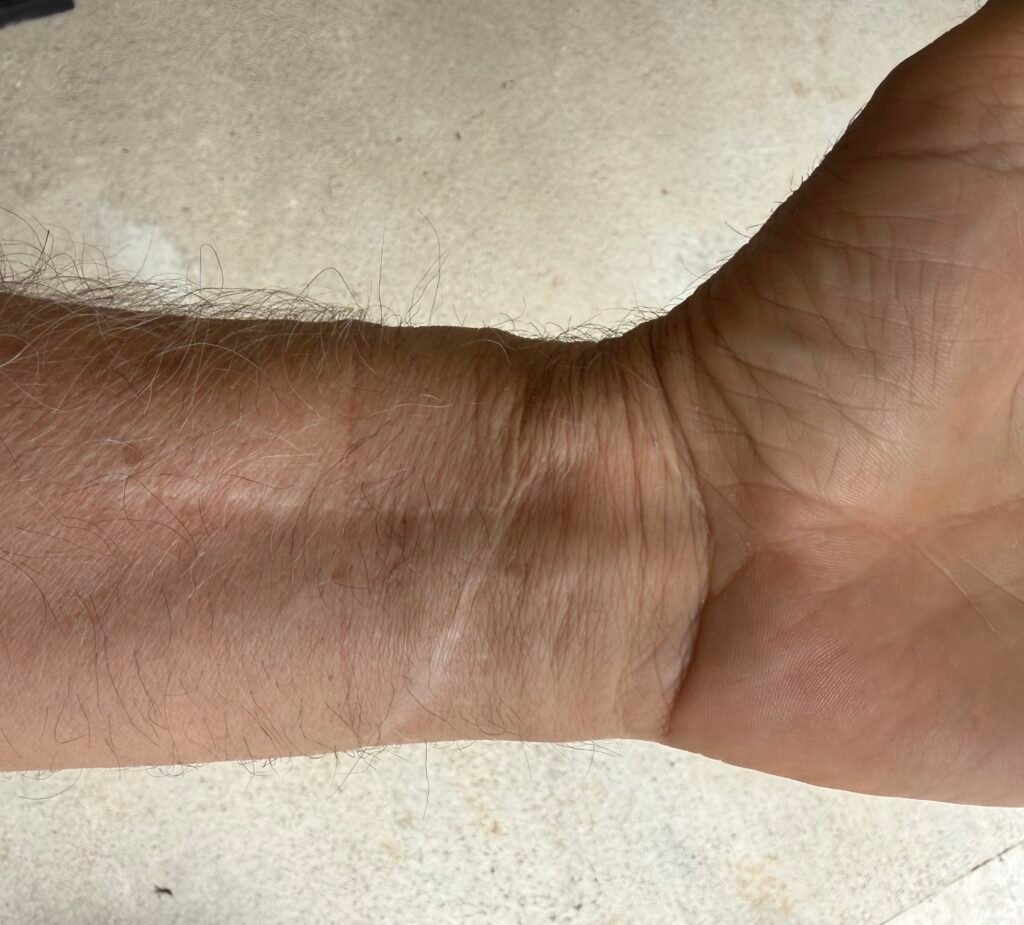
During that same season of life, Dawn and I were remodeling our kitchen. We were tearing out old cabinets and preparing for new ones. I had been fighting with a stubborn soffit above the cabinets for what felt like forever. Finally, I yanked hard on part of the framing and suddenly the long strip of sharp metal corner bead snapped loose and wrapped around my wrist.
Immediately, I knew I was in trouble. My wrist was seriously cut and blood was everywhere. Dawn grabbed towels and wrapped my left wrist tightly while we rushed to the ER. Within a couple of hours, I was getting stitched back together. The cut ran across my wrist in exactly the kind of place that immediately raises concern for self-harm.
A few hours later, I went back to work. That may sound ridiculous now, but crisis work was like that sometimes. Adrenaline, purpose, exhaustion, and dark humor all mixed together. I walked into homes and hospitals that night with blood-stained bandages still visible on my arm.
And something strange happened. Clients no longer saw me as the competent crisis counselor. They saw me as one of them. The next day, I met with a client who had dozens of needles and pins stuck into different parts of their body. The entire presentation was theatrical, provocative, and intentionally shocking. The goal was to get a reaction from me.
Normally, I would have approached it clinically and carefully. But this time, almost instinctively, I pulled back my sleeve slightly and showed my stitches. “You’re not the only one who has had a bad week,” I said. Oddly enough, it worked. The tension broke. The interaction became more human and less performative. For a moment, the client seemed less heard and understood.
But over the next few days, I also noticed something else. My credibility had changed. Even though my injury was accidental, the visible wounds altered how people perceived me. Some clients became less trusting of my stability. Others subtly shifted into caretaking mode. A few looked at me with the same cautious suspicion people often reserve for helpers who appear emotionally unraveled.
That experience taught me something important about counseling and about wounded healers. Clients do not expect perfection. In fact, most clients prefer therapists who are human, grounded, and capable of understanding suffering firsthand. But there is also a difference between a healer who has scars and a healer who is actively bleeding.
People seeking help need to feel that someone in the room is emotionally steady enough to hold their pain without needing the client to hold theirs in return. Wounded healers can become extraordinary counselors. Some of the best therapists I have ever known came into the profession because they survived something difficult themselves. Their scars often deepen empathy and reduce judgment.
But wounds still healing can create confusion in the therapeutic relationship. Clients may stop focusing on themselves and start worrying about the counselor. Boundaries blur. The helper becomes the one silently asking to be rescued.
Within a few days, I bought sweatbands to cover my wrists. Not because I was ashamed of the injury. And not because therapists must pretend to be invincible. I bought them because I realized my clients needed me to be emotionally present more than emotionally exposed.
There is wisdom in transparency. But there is also wisdom in healing privately long enough that your wounds become scars instead of open invitations for others to caretake you.
Ironically, the scars are still there all these years later. Every now and then, a physician notices them during an exam and pauses for just a second too long before asking what happened. I still find myself explaining that it came from a kitchen remodel, a collapsing soffit, and a piece of sharp metal corner bead. And honestly, part of me still wonders whether they fully believe the story.
Maybe that is also part of the lesson. Visible wounds tell stories whether they are true or not, and people often fill in the blanks with their own assumptions about pain, stability, and survival.
Dr. Wesley