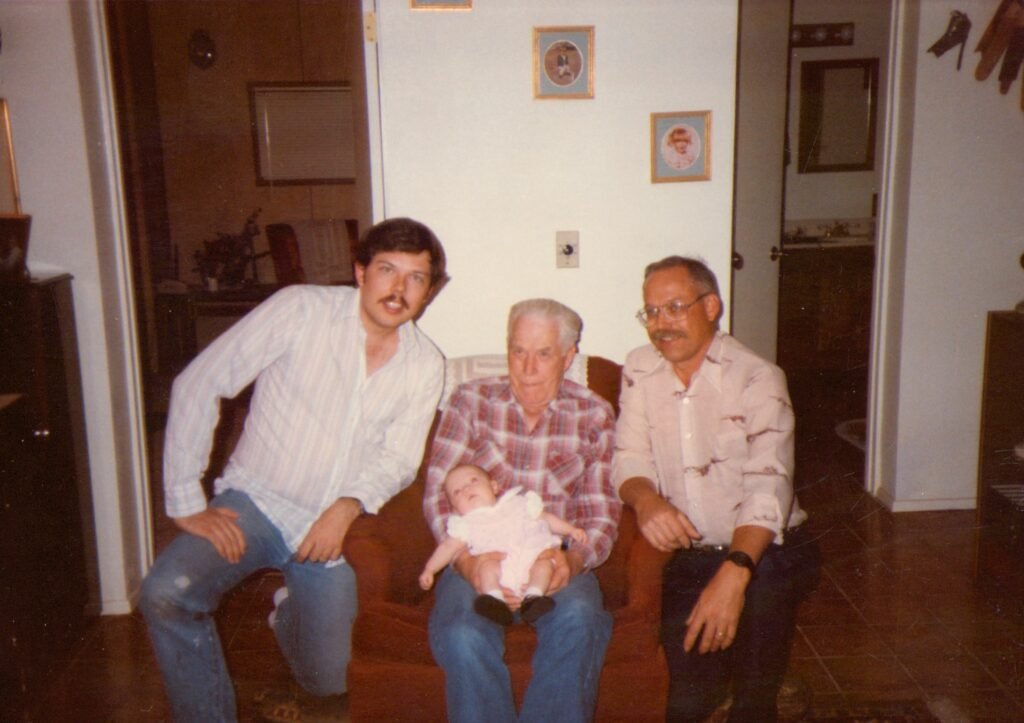
Our relationship with our parents doesn’t end when we become adults. It just changes form. And when that relationship is strained, it doesn’t stay contained in the past. It seeps into identity, into marriage, into how we see ourselves in the mirror. For better or worse, our parents are our first reference point for what it means to be human. When that foundation is steady, it gives us something to stand on. When it’s fractured, we often spend years trying to rebuild it, or trying to prove we don’t need it.
I’ve lived on both sides of that. I’ve always had a strong, steady relationship with my mom. She lives with us now, and while Dawn and I try to maintain clear boundaries and our own sense of home, there’s a comfort in her presence here. There’s continuity. A sense that some part of my story is still intact and close by. My relationship with my dad was different. It was on and off, complicated, and at times painful, especially in how he treated my mom. Watching him, I learned as much about what not to become as what to become. And if I’m honest, that came with a quiet fear. When you see troubling patterns in a parent, you don’t just judge them, you wonder about yourself. Is that in me too? Will I become that if I’m not careful?
In a strange way, that fear can serve a purpose. It keeps you alert. It pushes you toward intentionality. But it can also leave you feeling ungrounded, especially when the relationship itself is unstable.
There were seasons when my relationship with my dad was off, and during those times, I felt it, not just toward him, but in my own sense of direction and belonging. It’s hard to feel anchored when the people who gave you your start feel distant or unresolved. Over time, something shifted for me. I began to see him not just as “my father,” but as a man, a human being shaped by his own history, doing the best he could with what he had been given. That didn’t excuse everything. But it gave me enough perspective to step out of the shadow and choose my own way forward.
Dawn’s experience has been different. Her parents have always struggled to relate to her as an adult. Even now, they tend to treat her less like a woman who has built a full life and more like a child who still needs direction. The relationship never fully transitioned from authority to mutual respect and from control to connection. That kind of dynamic leaves a mark. You can build a strong life, a healthy marriage, a clear sense of purpose, and still, somewhere underneath, feel a little untethered. Like your roots were never fully allowed to deepen. When you add in rigid beliefs, whether political, religious, or otherwise, that shut down curiosity and conversation, the distance only grows. Not because of disagreement alone, but because of the loss of the relationship itself.
And that’s the part we don’t talk about enough. This isn’t about agreeing with our parents on everything. It’s about having a relationship that can grow as we grow. One that shifts from instruction to conversation. From hierarchy to mutual regard. When that shift doesn’t happen, something important gets stuck.
So, what do we do with that? We don’t get to rewrite our past. But we do get to decide what we carry forward. We can name what was missing without being consumed by it. We can see our parents clearly, both their limitations and their humanity. And we can choose, with intention, the kind of people we want to become.
In the end, a strong relationship with our parents, when it’s possible, is a gift that keeps grounding us throughout life. But even when that relationship is strained or incomplete, we’re not without direction. We can still build roots. We can still grow something healthy.
And sometimes, we can become the kind of parent or person we needed all along.
These days, I think more about what this means for my own children. Dawn and I want to be a safety net for them; something steady they can fall back on when life gets hard. But we also know that if we hold on too tightly, we risk becoming the very thing that keeps them from becoming who they’re meant to be.
There’s a tension there. Being present without controlling. Offering wisdom without assuming we always know best. (That is a hard one for me sometimes!) Letting them struggle without stepping in too quickly.
I’ve come to believe that what they need most from us isn’t perfection or constant direction. It’s consistency. It’s knowing we’re here. It’s seeing, over time, how we live, how we treat people, how we handle failure, and how we keep going. In the end, our example carries more weight than our advice ever will.
And maybe that’s where all this leads, not just understanding where we came from, but choosing, day by day, what we pass on.
Dr. Wesley