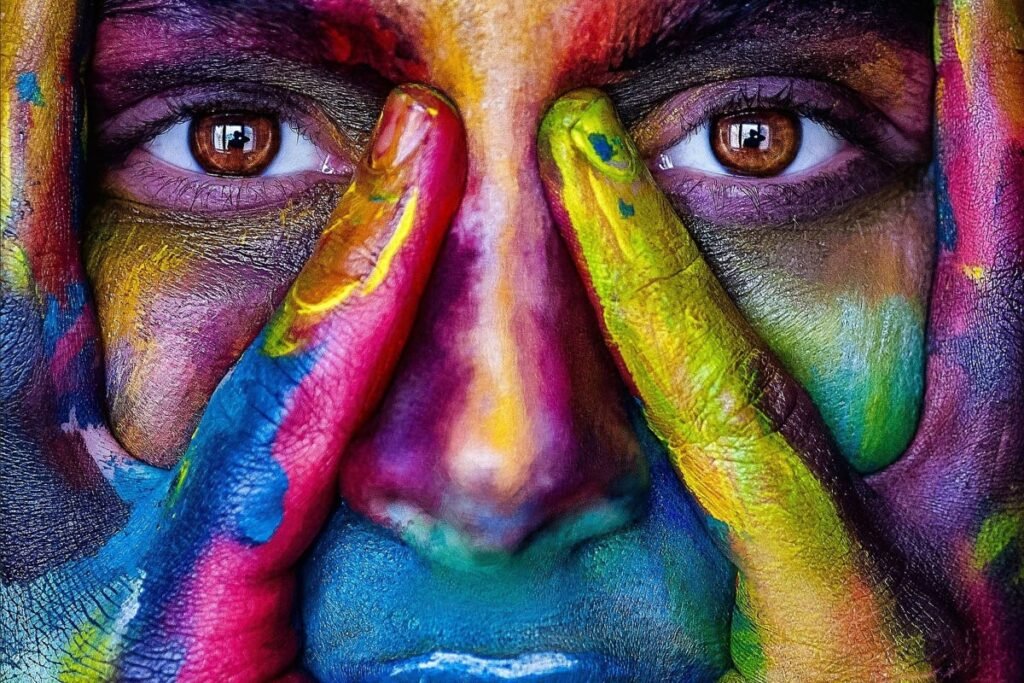
I don’t wake up thinking about my skin color. It isn’t part of my self-understanding, it doesn’t guide how I move through the world, and it certainly isn’t the foundation of my identity. My family came from the hills of Kentucky. That means something to me… the stubbornness, the loyalty, the humor, the small-town grit, the family stories, the way people talk with their whole faces. That’s culture. That’s where my roots grow. And yet, in today’s climate, none of that seems to matter.
Instead, I’m told, especially when someone is irritated with something I’ve written or said, that I’m “just an old white guy.” It’s meant as a dismissal, a shorthand way to say that my age and my skin make me irrelevant. That, unless I belong to a particular group, I cannot understand anyone outside my own. That identity is determined by pigmentation rather than personality, place, or experience.
It’s a strange thing to have someone else announce your identity for you. And an even stranger thing when their version erases everything that actually shaped you. What bothers me is not the insult. I’ve lived long enough to shrug off name-calling. What bothers me is how shallow our entire conversation about “culture” has become.
And I learned, early on, that it didn’t have to be this way.
The Kind of Multicultural Training That Actually Worked
When I was earning my master’s degree back in the 90s, the licensing board had just added a multicultural requirement. I wasn’t sure what to expect. I took the course through Ottawa University in Phoenix because Northern Arizona University didn’t offer one yet. I walked in curious, a little uneasy, but ready to learn.
My instructor was a Frenchman who had recently immigrated to the United States. And he didn’t lecture us on identity politics. He didn’t assign readings on privilege. He didn’t divide us into categories or build a hierarchy of who had the “right” to speak. Instead, every week he brought in a person. A human being with a story, a history, a lived world.
One week, it was a Greek Orthodox priest. I’d never met someone from this tradition before. He walked us through his rituals, beliefs, and traditions with such hospitality that it felt like stepping through a doorway into someone else’s house. We could ask anything. Nothing was off-limits. By the end of the hour, I had a window into a culture I’d never encountered.
Another week, a nineteen-year-old young man sat with us. His father was Black. His mother was white. He looked white by every visible cue, but inside, he felt suspended between identities, belonging everywhere and nowhere. Thirty years later, I still wonder how he resolved that tension. His story wasn’t about skin tone. It was about belonging, loss, and the ache of not feeling at home.
Another week, a man who identified as a Molokan joined us. Not a race. Not a demographic checkbox. A persecuted cultural tradition rooted in a sect of religious dissenters who broke away from the Russian Orthodox Church 200 years ago. They were called Molokane, “milk drinkers”, by the Orthodox clergy because they refused to abstain from milk or meat during holy fast days. They called themselves Spiritual Christian Holy Jumpers and were also known for refusing to bear arms. He spoke of rituals and values that had nothing to do with color and everything to do with lineage, faith, and the stories passed down.
I loved that class. We didn’t talk about systemic racism. We didn’t rank identities in order of moral virtue. No one was treated as fragile, privileged, or guilty of past atrocities. No one assumed the worst about us based on our group membership. It was a course built on human curiosity. A course focused on understanding, not scoring points. A course that taught us how to cross cultural boundaries without fear. That’s multicultural training as it was meant to be… crossing worlds, not dividing them. According to a College Fix analysis,
The Shift: When Culture Got Flattened Into Color
Fast-forward to today, and the landscape has undergone significant changes. Most multicultural and diversity-related courses and DEI offices are staffed by educators and administrators who identify as Black. For example, a recent national survey found that a majority of Chief Diversity Officers (CDOs) in higher education identified as Black or African American. According to a College Fix analysis, “while black Americans are only 13 percent of the population, they were 80 percent of the highest-ranking diversity officials. Meanwhile, Latinos were only six percent, despite being 19 percent of the population. Asians made up only two percent, despite being seven percent of the U.S. population. White people did not fare well, securing about two percent of the top roles.” This pattern suggests that in most institutions, the term “culture” or “diversity” has become closely equated with skin color or race, as though culture and diversity begin and end with skin color alone.
If over half the student body is white, today’s educational system believes “cultural diversity” requires bringing in someone darker. If over half the student body is comprised of students of color, we often fail to bring in someone who will challenge their understanding of various people and cultures outside of their own.
But culture is not color. Culture is shaped, learned, lived, and transmitted. Culture is family, food, faith, values, geography, accents, humor, and worldview. That is demographic essentialism. The belief that outward traits dictate inward understanding… that the body you were born into determines the worldview you must carry. We should reject that in therapy, and we should reject it in education, as well.
What We Lose When Color Replaces Culture
Here’s what I’ve noticed: When we reduce culture to color, we don’t just simplify identity, we impoverish it. We stop asking about stories. We stop listening for nuance. We stop learning from the worlds inside each other. And in the process, people get mislabeled, misunderstood, and dismissed. My skin doesn’t tell the story of my life, and neither does anyone else’s.
When someone reduces me to “an old white guy,” it doesn’t just miss who I am. It also reveals how shallow their understanding of culture has become. It shows how comfortable we’ve grown with stereotypes, even as we claim to be fighting them.
We need to meet people where they actually are, not where the advocacy groups, politicians, or ideological tribes tell us they should be. Culture is not defined by color, identity is not a matter of assignment, and people are not defined by categories.
We can do better. We must do better if we want to understand one another, not as representatives of a group, but as human beings with stories that run deeper than the shade of our skin.
Dr. Wesley