I have always loved old family photographs. Sometimes they capture more than the people standing in them. They capture a story.
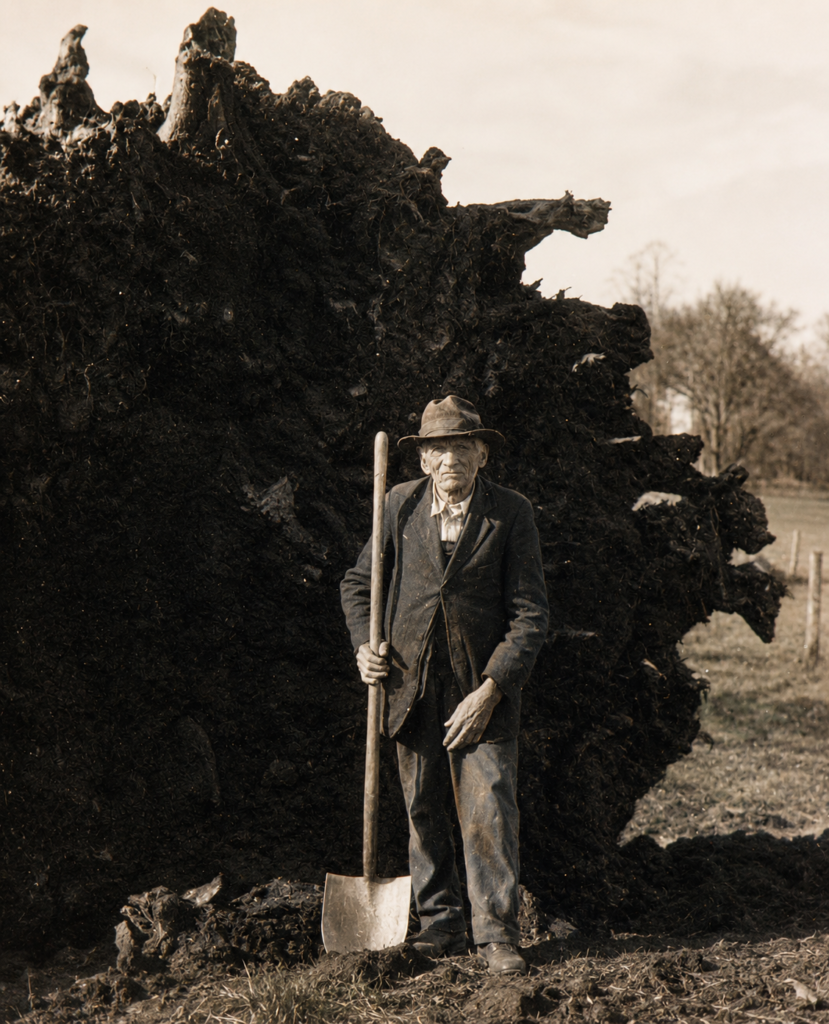
The man in this photograph is my great-great-grandfather, William Perry Martin. He was already an old man when this picture was taken, well into his seventies. Behind him is an enormous tree stump, and in his hands is a shovel. At first glance, it may look like nothing more than an old Kentucky farmer doing what farmers have always done. But I think there is considerably more to the story.
That stump had apparently bothered him for years. For most of those years, he did what sensible people often did with a stump that large. He worked around it. The stump was there, but life went on around it. There were crops to tend, work to do, children to raise, bills to pay, and a hundred other things more important than spending weeks trying to remove something that could simply be avoided.
There is an old farming expression I wrote about in my book Roots of Resilience: Life is simpler when you plow around the stump. It is a wonderful metaphor for life and, I believe, for counseling.
We live in a time when we are frequently encouraged to dig. Dig into your childhood. Dig into your relationships with your parents. Dig into your trauma. Find the source of the pain. Identify the wound. Process it. Understand it. Heal it. Sometimes that is exactly what we need to do. But sometimes it isn’t.
I have worked with people who knew perfectly well that there were stumps in their fields. They knew something painful had happened to them. They understood that their childhood was less than ideal, that someone had hurt them, or that something had been lost that could never be recovered. But they had built meaningful lives anyway. They had marriages, children, careers, friendships, faith, purpose, hobbies, gardens, dogs, grandchildren, and things they still wanted to accomplish. They had learned to plow around the stump. I don’t consider that a therapeutic failure.
In Roots of Resilience, I argued that there are times when accepting the existence of trauma and learning to live around it may actually be healthier than reopening an old wound. But there are other times when the stump begins interfering with too much of the field. Its roots reach into other areas of our lives. We keep running into it. We organize more and more of our lives around avoiding it. At that point, perhaps it is time to get the shovel.
And that brings me back to Grandpa Martin. At some point in his seventies, after having worked around that old stump for years, he apparently decided he had had enough of it.
I don’t know exactly what went through his mind. That’s one of the frustrations of family history. The people who could answer our questions are often gone by the time we think to ask them. But I know something about his life. He had spent much of it teaching. He had worked, raised a family, contributed to his community, and reached an age when society might have politely suggested that his productive years were behind him. Perhaps he wondered that himself.
Then there was that stump. Maybe removing it wasn’t really about the stump anymore. He began digging. Not with a bulldozer or a backhoe. There wasn’t a crew of young men standing around waiting to help. He had a shovel, his hands, and time.
So, each day he worked on it. He dug around one side. He exposed another root. He cut what he could. Then he came back another day and dug some more. Day after day. Week after week. Month after month.
The photograph captures him after he removed that old tree. There is something I love about seeing this elderly man standing beside an obstacle considerably larger than he is, shovel in hand, apparently unconcerned with the absurdity of what he has decided to accomplish. But, he got the old stump out!
I find myself thinking about what those months must have been like for him. Digging is repetitive work. There would have been long stretches of silence with nothing but a shovel hitting dirt and roots. Plenty of time for an old teacher to think about the life behind him.
Perhaps that is another lesson hidden in this photograph… We don’t have to dig up everything simply because it is there. But neither are we ever too old to decide that something we have worked around long enough is finally worth confronting. That is different from believing we must constantly excavate our past. There should be a purpose to digging.
Maybe something from childhood continues affecting the way we love our spouse. Maybe an old betrayal makes trusting anyone difficult. Maybe grief we thought we had accommodated has begun showing up somewhere else. Maybe anger toward a parent has quietly shaped how we parent our own children. Maybe an experience we successfully plowed around at 25 has become something we want to understand at 55.
The fact that we were not ready to dig then doesn’t mean we were avoiding healing. Perhaps plowing around it was exactly what allowed us to build the strength necessary to return later. And perhaps we never need to return at all.
That matters to me as a counselor. Therapy should not become an archaeological expedition in which the therapist assumes that something terrible must be buried somewhere and keeps digging until something is found. The client gets to decide which parts of the field need attention.
Sometimes our job is to help someone steer the plow. Sometimes it is to help them use the shovel. And wisdom is knowing the difference.
There is one final part of the stump metaphor that I find particularly important. Even when you remove an old stump, you rarely remove every root. Some remain underground. Years later, you may encounter one while digging a garden or putting in a fence. Occasionally a small shoot may even appear where you thought the old tree was completely gone.
Human beings are much the same. Healing does not require us to erase our history. What happened happened. The roots become part of the landscape beneath us. In fact, in Roots of Resilience, I wrote that the goal is not pretending those roots no longer exist but learning what to do when they appear again.
Maybe William Perry Martin knew something about that. He couldn’t make the tree never have existed. He couldn’t erase the years that stump had occupied that spot. But one day he could look at it and say, in effect, I think I’m ready to deal with you now. Then he picked up his shovel.
There is something wonderfully hopeful about that image to me, particularly now that I am getting older myself. Our later years don’t have to be merely a time of looking backward at what we accomplished when we were younger. There may still be stumps worth digging out. There may still be things we want to understand, repair, forgive, finish, build, or change.
And nobody gets to tell us that we are too old to start digging. Grandpa Martin apparently spent months removing that stump. Someone probably told him he was crazy. Maybe he was.But he got the stump out. And fortunately, somebody took a picture.
Dr. Wesley