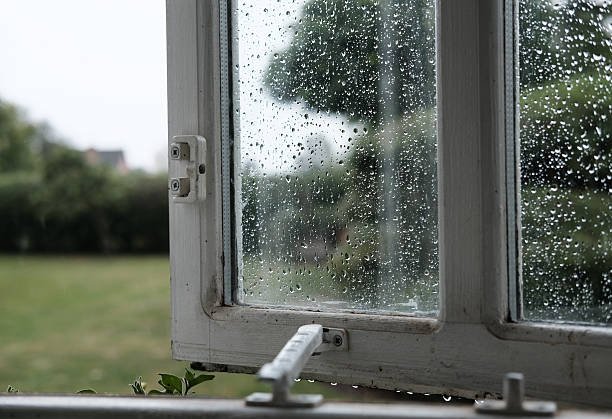
The rain started sometime after midnight. Not the violent kind of storm that rattles windows or sends people scrambling for weather alerts, just a steady Appalachian rain falling softly through the darkness. Before going to bed, I had accidentally left the door cracked open, and during the night the opening widened and the house slowly filled with cool, damp air and the smell of wet earth. When I woke this morning, I didn’t rush to close it. I just lay there listening.
The sound of rain falling on the porch roof mixed with the dripping from the trees outside. The air felt cool and heavy with moisture, and the scent coming through the doorway immediately carried me backward in time. Smell has a strange way of doing that. Before I was fully awake, I was no longer lying in my own home. I was a boy again at my grandparents’ farm in Kentucky.
Their farmhouse had no air conditioning, so during the warmer months the windows stayed open day and night. Thin curtains would sway with the breeze while rain tapped against the tin roof overhead. The whole house smelled like wet grass, old wood, soil, and whatever my grandmother was cooking in the kitchen before daylight. I can still picture the faded furniture, the dim yellow lights, and the sound of my grandpa’s boots crossing the old wooden floors. There was something deeply grounding about that place. Life moved slower there. People adjusted themselves to the weather instead of trying to overpower it. Rain changed the rhythm of the day. Heat forced you to slow down. Evening breezes mattered.
Even now, all these years later, those memories settle something inside me.
As I listened to the rain this morning, another memory surfaced, one that was far less peaceful at the time. It was nearly forty years ago, when Dawn and I were still in our twenties, and our daughter, Destiny, was just a baby. We had decided to go camping in the mountains for the weekend. Like many young couples starting out, we didn’t have much money. We had enough for a tent, some simple food, formula for the baby, and enough gas to get there and back. Back then, that was enough for an adventure.
I remember pulling into the primitive campsite somewhere near the Mogollon Rim in Arizona. For a few brief moments, the weather looked beautiful. Tall pine trees swayed gently in the mountain air, and the smell of the forest after a recent rain made the whole place feel alive. We were excited and hopeful, imagining a peaceful weekend away from everything.
Then the sky opened up.
I had barely started putting up the tent when the rain came pouring down. Within minutes, everything was soaked. The tent, which wasn’t even fully standing yet, absorbed water like a sponge. Our blankets and supplies became damp, the ground turned to mud beneath our feet, and darkness began to settle over the mountains. I remember trying desperately to get a campfire started so I could heat Destiny’s formula, but the wood was too wet and the rain too heavy. Nothing would light.
At some point, standing there drenched in the cold mountain rain, exhausted and frustrated, I realized the trip was over before it had really begun. Dawn and I finally looked at each other and decided to pack everything back into the car and head home, even though it was already dark.
What we didn’t realize was that nature still had more lessons waiting for us.
The normal road off the mountain had been closed, forcing us into a massive detour through Snowflake, Arizona and then down through Salt River Canyon. Years ago, that canyon road was not for the faint of heart. It twisted through steep cliffs and narrow mountain passes where darkness swallowed everything outside your headlights.
Somewhere along that winding road, we suddenly slammed into a massive boulder sitting directly in our lane. The impact destroyed the tire and wheel instantly. By some grace, it did not send us over the edge of the canyon. I still remember standing beside the road in the darkness, trying to change the tire while cars whipped around the curves nearby. To make matters worse, the replacement tire was one of those tiny donut spares designed for emergencies and supposedly not meant to travel more than a short distance. We still had hours left before we would finally make it home.
At the time, it felt frightening and overwhelming. We were young, tired, broke, soaked from the rain, carrying a baby through the mountains in the middle of the night, and trying to figure things out as we went. But here is the strange thing about memory: when Dawn and I talk about experiences like that today, we do not remember them with bitterness. We remember them with satisfaction. Those moments became part of the story of our lives together.
I think modern life sometimes tricks us into believing comfort is the ultimate goal. We surround ourselves with climate-controlled homes, endless entertainment, instant answers, and technology designed to remove inconvenience from nearly every corner of life. In many ways, those advances are wonderful. But I also wonder if we have lost something important along the way.
For most of human history, people understood that challenge played a role in shaping character. Young men and women were expected to venture into difficult experiences as part of becoming adults. They learned to work through discomfort, uncertainty, fear, weather, exhaustion, and failure. Nature itself taught resilience. Rain ruined plans. Roads closed. Tires blew out. Campfires would not light. And somehow, people adapted and kept moving forward.
I am not romanticizing suffering. There is enough genuine hardship in the world already. But I do think there is something psychologically healthy about discovering that you can survive difficult moments. Shared struggles often create deeper bonds than shared comfort ever could. Some of the most meaningful memories of my life were not the easiest ones. They were the inconvenient ones, the uncertain ones, the moments where things went wrong, and we had no choice but to persevere.
This morning, lying there listening to the rain drift through the open door, I realized those experiences are part of what still grounds me. The smell of rain does not just remind me of peaceful mornings at my grandparents’ farm. It also reminds me that some of the best parts of life are formed in moments when we are pushed beyond comfort and discover that we are stronger than we thought.
Dr. Wesley