Over the years, I’ve noticed that when I speak about the diagnosis and overdiagnosis of children, or the growing tendency to label every challenge as a mental health disorder, some people assume I’m speaking from a place of privilege or outdated thinking. I understand why. I don’t fit the profile of what many would call a progressive voice in mental health. But the views I hold weren’t born from ignorance or indifference; they were shaped by decades of direct experience with children, families, and systems that were trying their best, but often doing harm in the name of help.
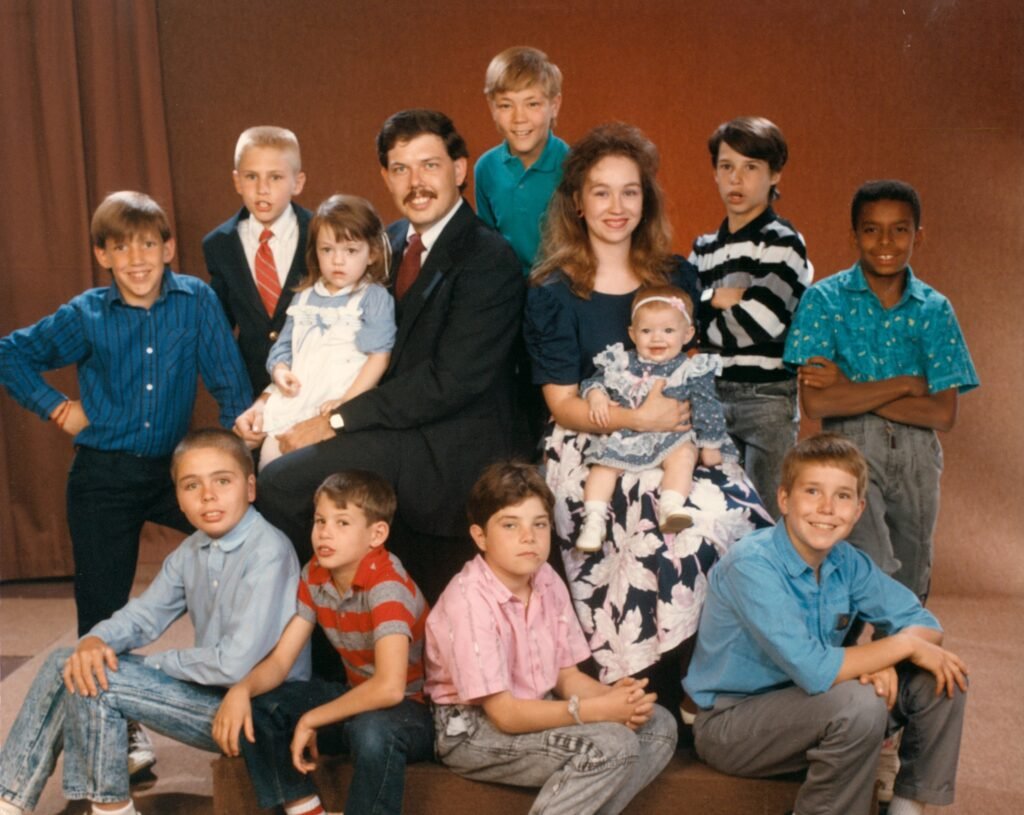
Before I ever became a professor or counselor educator, I spent years in the trenches of child welfare. My wife, Dawn, and I served as houseparents for preteen and teenage boys (see the early pic of Dawn, me, Destiny, Brittany, and our housekids – this pic was before Milo was born) who had been abused, neglected, or abandoned. We ran group homes for both boys and girls, raised our own children while raising others’ for years at a time, and watched firsthand how trauma and resilience could grow side by side. I also worked for Child Protective Services, investigating abuse and neglect, often walking into homes where the system had already failed. I oversaw group homes, foster agencies, and treatment centers serving hundreds of children and adolescents.
I worked at the Arizona State Hospital, in the adolescent unit that treated some of the most complex and heartbreaking cases in the state. These were kids who had been through every diagnosis imaginable and every level of care available. Some improved, some didn’t, but I learned to pay close attention not just to their symptoms, but to their parents, their culture, their community, and how all of these shaped their sense of who they were.
I’ve seen nearly every diagnosis in the book, given both appropriately and carelessly. I’ve seen children medicated into numbness and others thrive under the right treatment. I’ve seen the same diagnosis used to justify discipline in one child and pity in another. Over time, I began to notice a troubling pattern. A label that once helped explain behavior started to define identity.
“My child has ADHD” slowly became “My child is ADHD.”
“My son struggles with anxiety” turned into “My son is anxious.”
The difference might sound subtle, but it’s not. Once the label becomes the identity, everything changes: the way teachers talk to them, the way parents expect of them, and the way they see themselves. What starts as an explanation becomes a limitation. The diagnosis becomes a lens that filters every action, every emotion, and every expectation.
I am not naïve when I talk about raising children, working with families, or understanding human behavior. I’ve spent my life immersed in it. I’ve seen the good that counseling can do and the harm that can come when we lose sight of balance. I’ve seen well-intentioned professionals turn children into lifelong patients because it was easier to diagnose than to understand. And I’ve seen parents unintentionally reinforce helplessness because the label gave structure to their fear.
I say this not to dismiss the reality of mental health issues, autism, learning disabilities, and more, because I’ve seen those for years, too. I’ve seen children in the grip of psychosis, families torn apart by addiction, and adolescents whose depression was so deep that no motivational pep talk could reach them. But I’ve also seen remarkable resilience. I’ve seen children who defied every prognosis and families who rebuilt from ashes. I’ve seen kids who were told they would “never function normally” grow up to live rich, meaningful, independent lives.
I think of Zion Clark, born without legs, who became a champion wrestler, or
I think of Jim Abbott, who pitched a no-hitter for the New York Yankees with one hand.
I think of Temple Grandin, who turned her autism into innovation that transformed an industry.
Each of them could have been defined by a diagnosis or a deficit. Instead, they were defined by possibility.
I’ve spent my career as a skeptic, not a cynic, but someone who believes truth must always be tested. I read research that I disagree with because it sharpens my thinking. I challenge my own biases, and I try to see patterns across history and culture before accepting the latest psychological trend. The human mind is too complex, too intertwined with culture, biology, and circumstance, to be captured by neat categories.
What I’ve learned after all these years is simple but not easy: our job as counselors isn’t to hand out labels, it’s to hand back hope. A diagnosis may open a door, but resilience is what keeps someone walking through it. The field of counseling should always aim higher than classification. We should help people reclaim their stories, not redefine them by the worst chapter.
When I caution against overdiagnosis, it’s not because I dismiss suffering. It’s because I’ve seen what happens when suffering is mistaken for identity. Healing begins when we remember that labels describe conditions, not people, and that every person has the potential to grow beyond what any manual can predict.
Dr. Wesley