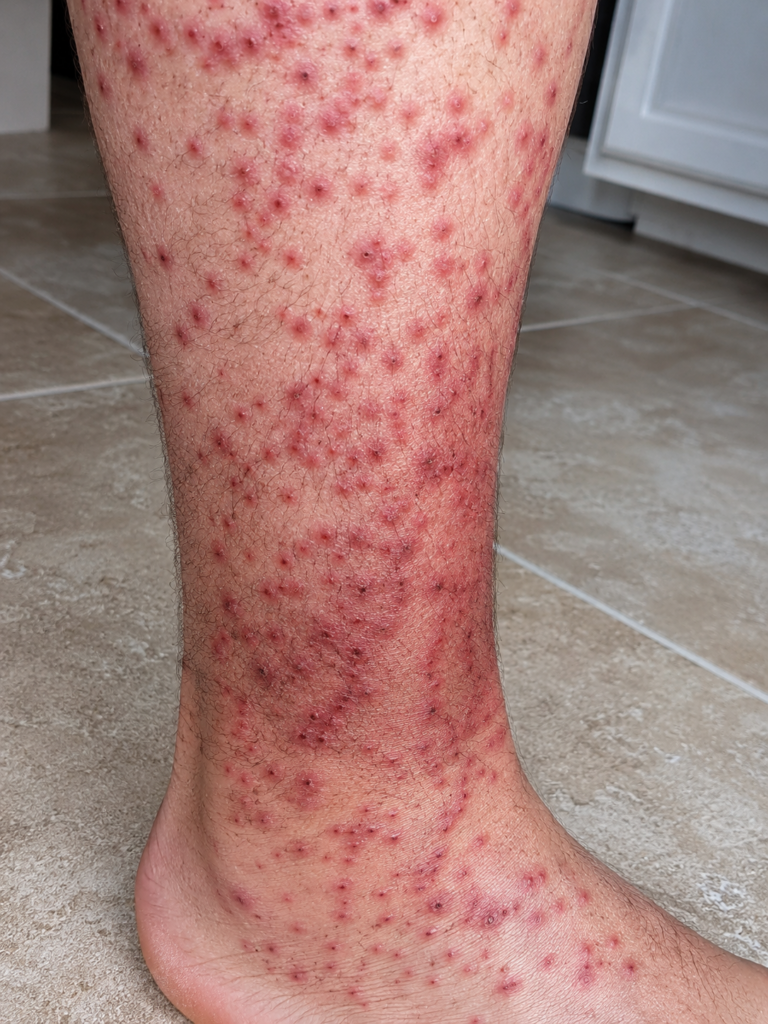
One thing about living in Kentucky is learning that nature is always trying to latch onto you. Ticks have been terrible this year because of the warm winter, and I have probably pulled thirty or fortoff me already. Yet as annoying as ticks are, they still do not compare to chiggers. If you have never experienced chiggers, then you are one of the lucky ones. These tiny red devils are almost invisible, but when they attack in mass, they can make a grown man absolutely miserable. I have dealt with them all my life when in Kentucky, but one particular experience about fifteen years ago changed the way I understand addiction and cravings forever.
At the time, I had spent the morning walking through a pasture cutting down tall grass. Looking back, I should have known better. I had no bug spray on, no protection, and no real thought that I might be stepping into a minefield of little demons. As soon as I finished, I had no time to shower, so I jumped in my truck and headed west across Kentucky to teach graduate counseling classes that evening. Somewhere during that drive, I realized I was in trouble. By the time I arrived, my ankles had started itching, and before long, the itching spread up both legs like fire crawling across dry timber. That night in the hotel room, I could barely focus on anything else. I had hundreds of bites up and down my legs, and the burning sensation was unlike anything I had felt before. Sleep was nearly impossible.
Over the next several weeks, I tried everything people recommend in Kentucky and beyond. I covered the bites with nail polish because somebody once told me it would smother them out. I bought every over-the-counter cream Walgreens carried. I rubbed oil on my legs, wrapped them in plastic wrap, soaked them, aired them out, and probably looked half-insane in the process. Nothing worked. The urge to scratch became overwhelming. I would tell myself I was not going to touch them again, but within 30 seconds, I would be scratching until my legs literally bled. I remember looking down at one point and seeing streaks of blood running down my shin while I kept scratching anyway. I knew I was making it worse. I knew I was tearing up my skin. I knew there could be infection and scars. Yet in those moments, relief mattered more than consequences.
Ironically, during that same period, I was teaching on substance abuse and addiction counseling. I have always believed people can change. I still do. I have never fully embraced the idea that human beings are powerless creatures with no agency over their lives. I do not see addiction primarily through a surrender model or strictly as a disease that strips a person entirely of responsibility and choice. I believe addiction is part of the human condition, and I believe people have the ability to seek treatment, change, reclaim themselves, and rebuild their lives. Yet despite years of teaching and counseling, there was always one part of addiction that was difficult for me to fully understand at a gut level. Why would someone continue using substances when they clearly saw the destruction happening around them? Why return to something that was tearing apart their health, marriages, careers, and families?
Then one night, while sitting on the edge of that hotel bed, scratching my legs raw, it suddenly hit me. This is what cravings must feel like. Not intellectually, but physically. The scratching brought relief, but only briefly, and then the burning returned even stronger. In that moment, logic became very small. I was no longer thinking about long-term consequences. I was thinking about stopping the discomfort right now. Suddenly addiction made far more sense to me than it ever had before. People who have never experienced severe cravings often judge addiction from the outside while sitting comfortably beyond its reach. From the outside, everything seems simple. Just stop. Just walk away. Just choose differently. But once the chemicals are in the body and brain, once the craving becomes fully alive, the experience becomes deeply physical, emotional, and primitive.
That realization did not make me believe people are helpless. In fact, I still strongly believe the opposite. People can change, and they can recover. But it did help me understand how overwhelming cravings can become once the cycle has fully taken hold. A person who is sober and thinking clearly may absolutely have the power to avoid certain people, environments, and situations, just like I should have prepared before walking into that high grass field. Yet once the infestation has begun, whether it is chiggers in the skin or chemicals in the brain, the body begins screaming for relief. In those moments, people are not weak or morally defective. They are suffering. That suffering can drive people toward behaviors they themselves hate and do not understand.
Eventually, I sought stronger treatment for the chiggers bites, and over time, the inflammation subsided. Within a few months, my legs healed, though I still have faint scars in a few places. More importantly, the experience left a permanent lesson in me. Some of the most important things I have learned as a counselor did not come from textbooks, theories, or graduate school lectures. Sometimes they came from ordinary life experiences that suddenly opened a window into another person’s pain. Oddly enough, one of the greatest lessons I ever learned about addiction came from standing in a Kentucky pasture while tiny little red devils crawled up my legs.
Dr. Wesley
Interesting observation. I served on a grand jury two years ago, and about 80% of the cases were directly or indirectly tied to drug use. In my four months of service we saw several names come before us again and again — all felonies. Even while walking from the parking lot to the court, I was many times approached by somebody just wanting a dollar or two — the price of a fentanyl pill. I always said no, but bought plenty of muffins after being reassured by the lady at the bakery they couldn’t be returned for cash. Yes, it’s that bad.
I’ve never been in the grip of addiction — smoking, drugs, alcohol, you name it. No clear-thinking individual would choose this for themselves or their family. But those already sucked in? I’ve spoken to many, and they’ve told me they’d take the drugs over anything — that means eating out of dumpsters, selling their bodies, committing crimes, living in a constant state of threats and violence, not bathing for weeks and always on the prowl for that next hit. Completely devoid of dignity and a future. Few have asked for help getting out of the cycle. How did we get here?