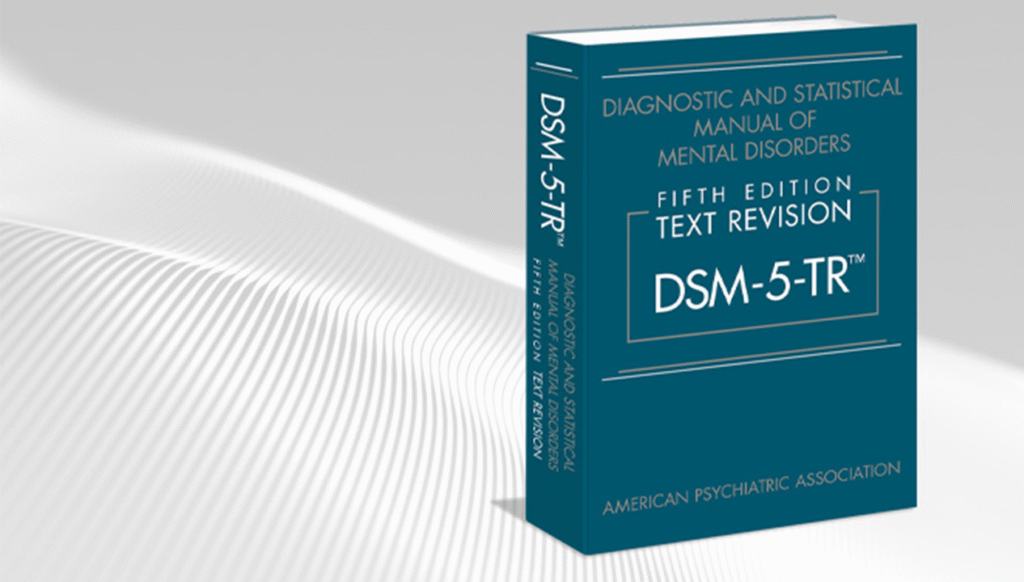
One of the hardest parts of being a counselor, or a teacher, for that matter, is learning how to care deeply without getting swept up in every new wave of mental-health awareness or trend. Often, someone walks into our counseling office or students speak up in my classes and say, “I just want to know if my child is on the spectrum,” or “I think I might have ADHD, I heard a podcast that described me perfectly.”
I never dismiss these questions. They come from a place of genuine concern, sometimes fear, sometimes hope, and often a deep desire to understand what’s happening in their world. But before I reach for a checklist or crack open the DSM, I ask one simple question:
“Why do you want to know?”
That question changes everything. It moves the conversation from the label to the meaning behind it. What would it change if the answer were yes? What would it change if the answer were no? Would this information lead to freedom or confinement, to clarity or to a new set of limits?
The Limits of Our Tools
When we diagnose a mental health disorder, we’re not reading a person’s biology; we’re interpreting their story. Most mental health assessments simply match what clients say to the symptom criteria in the DSM. Some counselors add standardized tests, which can add helpful data, but even those only show how well a person’s experience aligns with a statistical pattern. They don’t explain why a person feels what they feel or behaves as they do. There is no attempt to look for the root cause.
There’s no blood test for depression. No brain scan for generalized anxiety. No single marker that can tell us whether a person “has” something or doesn’t. Most psychological conditions don’t function like infections that can be confirmed or ruled out. They exist on continuums; shades of behavior and emotion, degrees of interference with daily life.
Often, the difference between “normal” and “abnormal” behavior, feelings, or thoughts isn’t the behavior, feelings, or thoughts themselves; it’s how much they disrupt life.
A child with boundless energy might simply be lively and curious until that energy collides with the structure of a classroom. A perfectionistic student might thrive in school but crumble under the weight of adult responsibilities. I’m a person who really struggles to stay focused in faculty meetings or during a sermon, but I might spend hours building something in my garage or writing this blog with intense concentration.
The question isn’t just whether the traits exist; it’s whether they keep someone from living, learning, and loving well.
When Environment Shapes the Mind
Sometimes the struggle isn’t within the person, it’s in the space they’re asked to live in. A rigid environment can make a flexible soul feel disordered. A chaotic one can make even the most grounded person unravel.
As counselors, we learn to look both ways: to the individual and to the environment. Sometimes a child’s anxiety is less about genetics and more about the constant noise at home. Sometimes an adult’s sadness is less about brain chemistry and more about disconnection, burnout, or loss of meaning. The relationship between internal and external worlds is fluid and reciprocal, one constantly shaping the other.
And one of the greatest tragedies I’ve witnessed is how this system often fails our most vulnerable children. I’ve seen foster children, or kids living in unstable, chaotic homes, diagnosed with disorders that supposedly explain their behavior, when the real problem was what they were surviving. Instead of recognizing that their symptoms were responses to trauma, neglect, or fear, we labeled them as the problem. Those diagnoses then followed them through schools, placements, and adulthood, leaving them with the impression that they were broken, rather than brave. We medicalized their pain instead of contextualizing it—and in doing so, we too often told a lie about where the real disorder lived.
Empathy Without Endorsement
When clients seek a diagnosis, they’re rarely chasing a label; they’re seeking validation. They want to know they’re not broken or alone. That’s where empathy comes in. But empathy doesn’t require agreement; it requires presence.
I often tell clients:
“It sounds like you’ve been struggling to make sense of this. Let’s look at what’s been hard and what’s been helping before we decide if a diagnosis will bring more clarity or more confusion.”
That response honors their experience without prematurely defining it. It keeps the conversation human.
Empathy joins people in their pain; wisdom helps them make meaning from it.
The Art of Gentle Challenge
A counselor’s job isn’t just to comfort, it’s to guide.
When someone tells me they want to know if their child “has” something, I try to hold two truths at once: their concern is real, and the answer might not lie in a label.
Our field is at its best when we help people find language for their experience, without turning that language into an identity. We can help them explore patterns, develop coping strategies, and build resilience while still leaving room for growth and nuance.
Compassion doesn’t mean lowering expectations. It means believing in people enough to expect more than helplessness. It’s helping clients and families see that a label may explain behavior, but it should never define potential.
Diagnosis as Description, Not Definition
Diagnosis can be useful: it can open doors to support, insurance coverage, or accommodations. But we must remember that it’s still just a classification system, a shorthand for patterns we observe. It’s not proof of defect or destiny.
There’s a fine line between normal and abnormal, functional and dysfunctional. That line shifts across cultures, families, and even time periods. What was once “eccentric” might now be “neurodivergent.” What was once “shy” is now “social anxiety.” None of this means these conditions aren’t real; it means they’re complex, human, and deeply contextual.
The Counselor’s Balance
To be a good counselor is to walk a line between empathy and evidence. To see pain, but not pathologize it too quickly. To listen fully, but also to challenge gently.
When I sit with parents, clients or even my students who want answers, I try to offer something better… perspective.
“Let’s understand what’s happening, but let’s not let it define who you are.”
Because the truth is, diagnosis is imperfect. It’s not a destination; it’s at best a crude map. It gives us a sense of direction, but the journey still belongs to the person. Our role isn’t to draw sharper lines around disorder, but to help people move forward through the beautiful, blurry gray of being human.
Dr. Wesley