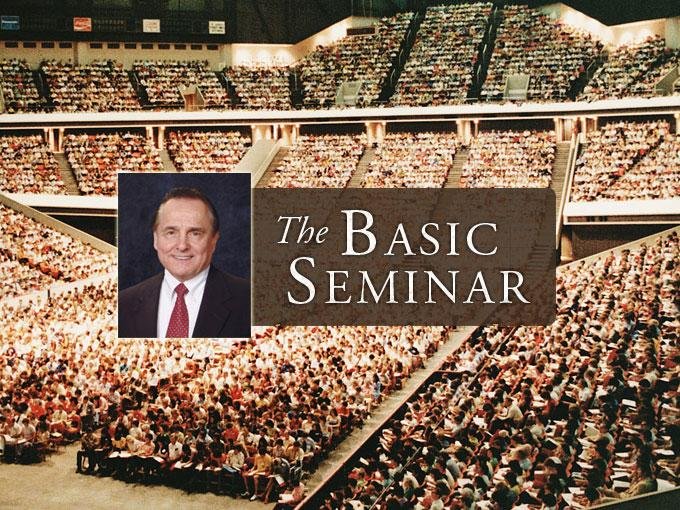
When I was twelve or thirteen, my parents came home from what felt like a spiritual revival for families. They’d just returned from one of Bill Gothard’s weeklong Basic Youth Conflicts seminars; those massive evangelical events that could fill entire stadiums in the 1970s and early 80s. They brought back binders, books, games, and a bright red notebook that looked like it held the secrets to a perfect Christian life. Later, I would attend my own seminar when I was seventeen or eighteen.
For a while, we bought into it. We played one of the games they brought home, Character Clues. It wasn’t exactly fun, imagine Monopoly, but instead of hotels and railroads you earned points for humility or discernment, but it did teach something valuable. We learned vocabulary around virtues: gentleness, patience, faithfulness, contentment. Those are good things to learn at any age. And in fairness, the movement wasn’t all bad. It gave many families a shared language for moral growth and an earnest desire to build character.
But under the surface, there was another story.
The Simplicity Trap
Gothard’s message was clear and simple… too simple. If you just followed the biblical “principles” he outlined, everything in life would fall neatly into place: family harmony, obedient kids, godly prosperity. There was a formula for everything, from how to resolve conflict to how to date, dress, or manage debt.
His framework was rigidly patriarchal. The man was directly responsible to God, the wife was under the husband’s authority, and unmarried daughters were still under their father’s “umbrella of protection” potentially until they died. Bill himself, a lifelong bachelor who claimed to remain under his parents’ authority, taught that women should treat their husbands as “Lord”, of the castle. He even ventured into some strange Old Testament interpretations, arguing that sex was mainly for procreation and should be avoided during certain “unclean” times of the month.
Despite the oddities, like the story he once told about a “demon-possessed guitar”, his movement exploded. The Institute in Basic Youth Conflicts (later Institute in Basic Life Principles) became a nationwide phenomenon. Tens of thousands packed arenas to hear him speak. He promised order in a chaotic world, and that’s a tempting promise for anyone raising teenagers in turbulent times. I, for the most part in my early life, accepted what I was being told.
But life doesn’t follow formulas. It’s unpredictable, messy, and deeply personal. What sounded like moral clarity too often became moral control. And the people who followed his steps exactly weren’t necessarily spared heartache. In the end, the man who preached purity and authority was himself accused by multiple women of sexual misconduct. He was quietly removed from leadership in 2014.
The movement that had once promised so much order and certainty, was now a case study in hypocrisy and spiritual harm.
Another Hero, Another Fall
Around the same time, another figure loomed large in my teenage imagination: Mike Warnke.
He was funny, charismatic, and claimed to have been a high priest in a Satanic cult before finding Jesus. His bestselling book The Satan Seller and comedy albums were everywhere in the Christian world. I loved them… Hey Doc was one of my favorites. I memorized his routines, repeated his punchlines (I still remember them), and admired his courage to speak about faith in the public square.
Then came the investigations. Journalists uncovered that Warnke had fabricated almost everything. He hadn’t been a Satanist, hadn’t been to Vietnam, and hadn’t lived the life he sold to churches and youth rallies for years. The comedian who made a fortune off “testimony” turned out to be a fraud.
That revelation hit hard. I wasn’t just disappointed in him, I was disillusioned with a culture that elevated personalities so high that truth became optional. In another post, I will write about someone else that I admired, but again, was a fraud… Ravi Zacharias.
The Lesson I Learned
Looking back, both Gothard and Warnke represent something I’ve spent much of my adult life teaching my counseling students: the danger of confusing charisma with character.
Charisma draws people in; character holds them together. The first can fill stadiums; the second can raise children, lead communities, and heal families.
What I saw in those movements was an honest hunger for order, purity, and purpose, but also a collective fear of complexity and spiritual uncertainty. Life, faith, and family don’t bend to seven steps or forty-nine virtues. They bend to grace. They bend to humility. They bend to love that keeps showing up even when the formulas fail.
As I think back on my parents’ generation, I don’t judge them for buying into the red notebook. They were trying to do what most parents try to do: raise good kids in a world that felt increasingly unstable. But I’ve learned that raising good kids isn’t about rules; it’s about relationship. It’s not about having an answer for everything; it’s about learning how to walk with people through uncertainty without losing your integrity or your empathy.
Dr. Wesley
I’m so glad you’re addressing this issue. I think it’s so important.