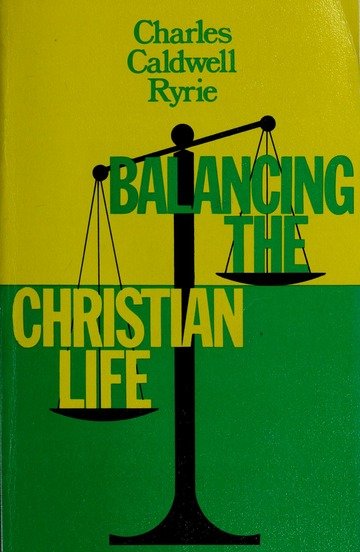
When Charles C. Ryrie (1925–2016), well-known Dallas Theological Seminary professor and dispensational theologian, wrote Balancing the Christian Life, his goal wasn’t to ignite decades of theological warfare. He wanted to talk about balance; about holding the Christian walk in tension between freedom and responsibility, doctrine and practice. But that word “balance” ended up setting off one of the longest-running debates in modern evangelical circles.
On one side were Dr. Ryrie and others who insisted that salvation was simple: ask for forgiveness, and God forgives. Full stop. On the other side were men like John MacArthur, whose The Gospel According to Jesus became the manifesto of what’s now called “Lordship Salvation.” They argued that salvation required more than asking; it demanded a life of submission to Christ as Lord, not just Savior.
For decades, this became a theological arm-wrestling match. And in the middle were everyday Christians, watching the alleged experts fight over what was supposed to be the most straightforward truth in the bible, that of God’s invitation to repent and believe. Instead, people walked away wondering, if I don’t follow the exact script of the right camp, am I bound for eternal fire? No pressure, right?
The real tragedy is how certainty hardened into condemnation. We started treating brothers and sisters who were almost identical in belief as if they were enemies. We drew lines so sharp that even people within the same household of faith were written off as heretics. And we forgot that when theologians and preachers argue endlessly about who is “in” and who is “out,” what gets lost is not just unity but humility.
That’s the danger of certainty. The louder we insist that our interpretation is the only correct one, the more room we give our own egos to grow. Before long, it’s not about Jesus anymore; it’s about winning.
Maybe the real balance isn’t found in systematizing salvation or the Christian life down to a perfect formula. Maybe it’s in remembering the values of Jesus: compassion, humility, service, grace, truth. The gospel was never meant to be a script you could mess up like an actor forgetting a line. It was meant to be good news, lived out in love.
So perhaps the wiser question isn’t “Which side is right?” but “How do we live in a way that reflects Christ’s heart while admitting that we don’t have all the answers?” Because at the end of the day, balance comes less from theological precision and more from the humility to realize that our certainty might be the very thing that blinds us.
Dr. Wesley