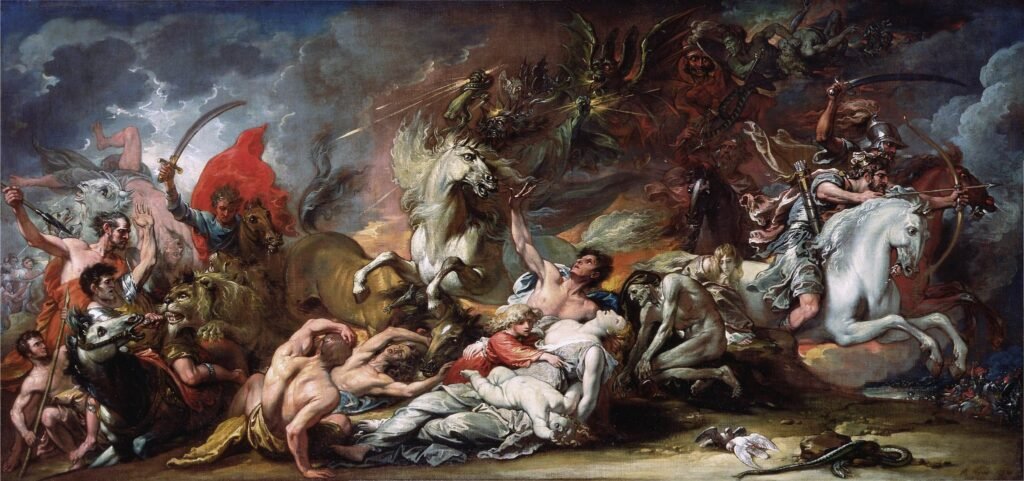
I was a teenager when I first learned the world might not last long enough for me to grow up. It didn’t come from a fringe voice or some distant preacher on television. It came from people I trusted. My dad had been reading The Late Great Planet Earth by Hal Lindsey, and like a lot of families in those years, those ideas didn’t stay on the page. They moved into conversations, into expectations, into how we imagined the future. And it wasn’t just books. It was the films.
Youth group nights weren’t always about pizza and games. Sometimes the lights went down, and we watched movies that felt more like warnings than stories. Films like A Thief in the Night, Distant Thunder, The Image of the Beast, and others like The Burning Hell weren’t presented as fiction. They were presented as previews of a real horror to come. People disappeared without warning. Clothes left in piles. Cars crashed into walls. Those left behind faced terror, persecution, and eventually execution. The guillotine showed up more than once. And beneath it all was the message: this is what’s coming, and it’s coming soon.
I can still hear the music. “Two men walking up a hill, one disappeared and one left standing still… I wish we’d all been ready.” That song didn’t feel poetic. It felt like a countdown.
What I never understood, even as a kid, was how some people seemed to look forward to it. They talked about it with anticipation. “Come Lord Jesus, come!”, they would say. There was comfort in believing they would be the ones taken, the ones spared. But even then, something didn’t sit right with me. Because built into that hope was something darker: the quiet acceptance that most of their family, friends and neighbors would not be spared. Not just left behind, but condemned. And somehow, that was folded into a story that was supposed to be good news.
I remember my dad saying he would never see me get married. That he would never be a grandfather. He didn’t say it with sadness. He said it with certainty. The timeline made sense to him. The rapture around 1981. The end by 1988, forty years after Israel became a nation. But I was a kid. And for me, it didn’t feel like certainty. It felt like something was being taken before I ever had the chance to live it.
I would lie in bed at night trying to imagine a future that, according to the adults around me, wasn’t going to happen. It created a quiet kind of anxiety that didn’t have a name. School felt different. Planning felt pointless. Even joy felt a little uncertain, like it was on borrowed time.
And then, of course, the dates passed. 1981 came and went. 1988 came and went. Life kept moving. Dawn and I got married. Our children were born. My dad did become a grandfather. Now, I am a grandparent, reflecting on when I was my grandkids’ ages.
The world didn’t end, but the pattern never really stopped. Evangelicals have been predicting the end since the earliest days of the church. The Apostle Paul himself wrote as if it would happen within his lifetime, even suggesting that people not marry because time was short. It made sense in that moment. But like every prediction since, it didn’t unfold the way it was expected. Still, each generation finds new reasons to believe they are the final one.
Today, that same interpretive lens has been placed over American politics, particularly around Donald Trump. For some evangelicals, Trump is not just a political figure. He becomes part of a larger prophetic framework, someone positioned within a story that is already assumed to be unfolding.
And Trump, for his part, has shown a willingness to speak into that kind of thinking. Recently, he warned in a public statement that the Iran war could lead to the end of an entire civilization. That kind of language resonates deeply with people already inclined to see current events through an apocalyptic lens. It reinforces the sense that we are not just living in complicated times, but in the final chapter.
It’s a powerful combination. Political rhetoric meets theological expectation. But it carries real consequences. Because when people believe the end is not only near but inevitable, their relationship to the future changes. The goal shifts. It’s no longer about building something that lasts. It becomes about aligning with what they believe must happen. In that mindset, escalation and violence can feel justified. Conflict can feel necessary to help God out. Even the destruction of a civilization and the killing of innocent human beings can be reframed as part of a divine plan.
History has shown us what happens when religious certainty fuses with political power. It rarely produces humility. It produces conviction without question.
The difference now is not belief, it’s capacity. We live in a world with nuclear weapons. The stakes are no longer symbolic or distant. They are immediate and irreversible. In earlier times, apocalyptic groups could isolate themselves, convinced the end was near, and their impact, while tragic, remained contained. Today, that same kind of certainty, if paired with modern power, has the potential to affect the entire planet.
That’s not theory, that’s the world we live in. And yet, here we are again. Another generation convinced it has finally decoded God’s timeline. But I keep coming back to that teenager lying in bed, trying to make sense of a future that adults around him seemed strangely comfortable giving up. They weren’t trying to harm me. They believed what they were saying. That’s what makes it complicated. Sincerity doesn’t make something true, and conviction doesn’t make something accurate. Blind faith, when it refuses to examine itself, can quietly reshape how we treat the world around us.
Maybe the better question isn’t whether the end is near. That question has been asked for two thousand years and answered the same way every time. Maybe the better question is this: “What kind of world are we building if we expect it to continue?”
Because if we’re honest, most of us still live like it will continue to exist. We raise children and plan for the future. We fall in love, raise our families, and hope for grandchildren. We invest in things we may never fully see completed. Even today, Dawn and I were planting vegetables we hope to enjoy in the summer and fall.
That’s not how people live when they truly believe everything ends tomorrow. That’s how people live when, deep down, they know it won’t.
So maybe it’s time to stop handing the future over to those who are certain it’s about to disappear. Maybe it’s time to choose leaders not because they fit into someone’s prophetic chart, but because they demonstrate something far more grounded. Character. Wisdom. Restraint.
Because history has made one thing clear: The world doesn’t end when someone predicts it will. But it can be damaged when people start acting like it should.
Dr. Wesley