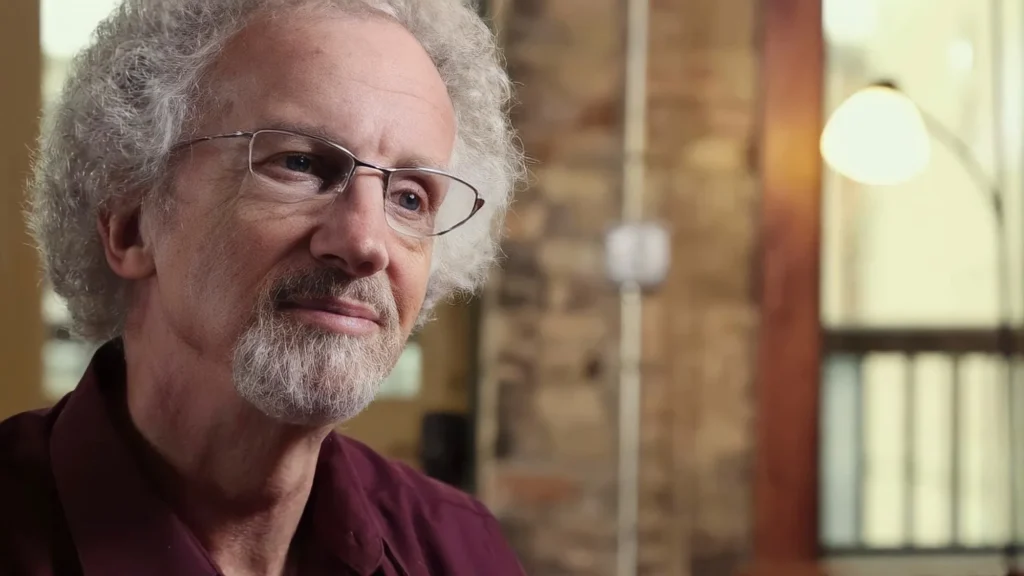
I have been thinking all week about the confession of Philip Yancey.
For decades, Yancey has been one of the clearest voices in evangelical Christianity, a writer who made grace feel believable again. His books didn’t just defend Christianity; they humanized it. He gave language to the weary believer, the bruised skeptic, the person who wanted to love Jesus but couldn’t stand the church.
So when he revealed that he had engaged in a long-term extramarital affair, eight years, by his own account, it felt like a gut punch. Not because we needed another reason to doubt, but because some of us had quietly hoped he was one of the safe ones. He called the affair sinful, confessed it to God and his wife, entered counseling and accountability, and stepped away from public ministry and writing.
That combination of confession, remorse, and retreat hits differently than the typical religious scandal. There was no fundraising scheme. No spiritual bullying. No brand management disguised as repentance. No polished statement written by lawyers and publicists. It was just a painful admission. I failed morally and spiritually, and I regret the devastation I caused,” he lamented.
And still, it raises the question we keep trying to avoid.
What do we do with hypocrisy in the Christian faith?
Because hypocrisy isn’t just an occasional scandal. It’s one of the most common reasons people walk away, sometimes from church, sometimes from Jesus altogether. It isn’t simply falling short; everybody does. Hypocrisy is what happens when the sin is covered, managed, spun, or monetized.
Many of us have lived through public collapses that didn’t feel human; they felt predatory. Ravi Zacharias is one of the most heartbreaking examples, because what was revealed wasn’t just failure, but exploitation that harmed vulnerable people. That kind of fall doesn’t just disappoint, it angers me. It makes your stomach turn. It also makes you want to cleanse the temple!
And then there are the classic religious charlatans; men who turned God into marketing, made faith into a stage show, and used spiritual language like a crowbar to pry open wallets, bedrooms, and power structures. I don’t just feel sadness with those stories; I feel disgust. Not because I’m self-righteous, but because I can see how many people were deceived.
So yes, sometimes when someone is exposed, I feel relief. A strange kind of gratitude. Because darkness thrives in secrecy. And truth, even ugly truth, is necessary. But then there are other falls… different kinds and different people.
Some fallen leaders feel like villains. Others feel like tragic humans.
Ted Haggard is one of those complicated cases. I’ve spoken with him personally after his downfall. I talked with him as he was working on the treadmill. I’ve heard his voice. I’ve listend to the man and watched a human being try to put his life back together after self-inflicted ruin.
That doesn’t erase what happened. But it does something else: it disrupts the easy story. It prevents us from turning broken people into monsters, so we don’t have to ask uncomfortable questions about our own capacity for failure.
Philip Yancey feels more like that category for me: a deeply gifted, thoughtful person who made catastrophic choices, lived a double life, and eventually came undone.
And here is where I find myself split right down the middle.
One part of me is a reasoned skeptic. That part says: Enough! Enough trust in celebrity Christians. Enough blind loyalty. Enough hero culture. Enough confusing giftedness with godliness. Enough believing that public ministry success is proof of private integrity.
But another part of me is a counselor. That part says, This is not theoretical. This is a marriage. This is a woman betrayed. This is a family shattered. This is a man who now has to wake up every morning and live inside the consequences of who he became.
And in that counselor part of me, I cannot ignore what the Christian gospel claims to be. Because if grace is only for minor sinners, then it isn’t grace. It’s a reward system.
And Philip Yancey’s entire career was built around saying the opposite.
Grace is not surprised by failure. But it is never casual about it either.
One of the temptations in moments like this is to swing to extremes. Some Christians rush to restore the leader instantly. They talk about forgiveness in ways that feel more like denial. As if sin is a speed bump and consequences are optional.
Other Christians go the opposite direction. They treat the fall as entertainment, a bloodsport, a public stoning with Bible verses. They call it “discernment,” but sometimes it’s just a thirst to see the mighty bleed.
I don’t trust either reflex. Because real grace does not minimize the consequences of their actions, but Christianity also doesn’t dehumanize them either. Even those who have failed terribly remain image-bearers. And that is one of the hardest truths of Christianity. It means the person you are furious with is still a child of God and brother to us all.
If Yancey’s confession accomplishes anything, I hope it exposes a deeper illusion we often keep cling to, that Christian maturity is the absence of temptation. No! Christian maturity is honest sobriety about the fact that all of us have a shadow self, the part of us capable of rationalizing almost anything if it means we get to keep what we want.
The larger scandal is not the sin. It’s the system that makes sin easier to hide.
Let me say it plainly… American Christianity has created environments where hypocrisy flourishes. I see celebrity platforms with no meaningful peer accountability. Ministry seems to have been turned into performance rather than shepherding. There is also pressure on Christian leaders and their families to appear spiritually strong at all times. We elevate leaders to an untouchable level and love being “led” more than loving truth.
And when a system trains leaders to project perfection, it almost guarantees secrecy. It almost guarantees compartmentalization. It almost guarantees that a private life will eventually diverge from a public one. And when that happens, the fall doesn’t just injure one person; it becomes a crater. Yancey himself acknowledged the devastation and disillusionment his actions would create.
That is why these stories reverberate through Christianity. It’s not only that a man failed. It’s a Christian witness that is damaged.
So, what do I feel?
I feel heartache. I feel anger. I feel disappointment. I feel compassion for him and more intensely for his wife and family. And if I am honest, I also feel something I don’t enjoy admitting: A kind of grim validation. Because the older I get, the less surprised I am by human weakness. Not because I’m cynical, but because I’ve learned how desire, loneliness, secrecy, entitlement, and spiritual pride can merge into a slow moral landslide.
I’ve sat with enough people, including pastors, in therapy to know that infidelity rarely begins as a plan. It begins as a private excuse. A hidden indulgence. A story the client tells themselves.
And then one day they wake up and realize they’ve become the very person they used to warn others about.
The question isn’t “How could he?” The question is “How do any of us avoid it?”
If we learn anything from these moments, I hope it’s this… That we don’t prevent hypocrisy by becoming harsher. We prevent hypocrisy by becoming more honest. Honest about pride, loneliness, power, emotional drift in a marriage, about everyone’s craving to be admired and loved, and about the danger of private worlds.
The greatest lies are not the ones told publicly. They’re the ones whispered internally: I deserve this… It’s not that bad… I can handle it. I’ll stop later. Nobody will know. Sometimes we even bring God into it with “God understands.”
A final thought: grace doesn’t erase consequences, but it may still write a different ending.
Philip Yancey may be finished as a public voice. And perhaps he should be. But repentance can be real, even when it is often elusive with others. Rebuilding can be real, and so can forgiveness. That restoration of a human being, of a marriage, of a community, can be real.
It is not instant, nor public. It is never performative. But it is possible.
That’s what makes this complicated for me. Because the same Christianity that demands honesty also forbids us from discarding people. And I do not want a Christianity that has no moral spine, but I also do not want a Christianity that has no mercy.
If the church becomes a courtroom with no grace, then we betray Jesus. If the church becomes a therapy group with no truth, we betray Jesus. If the church becomes a stage, we betray Jesus. And if we cannot hold both truth and tenderness, then all our “convictions” become another form of hypocrisy.
So yes, Philip Yancey’s revelation shakes me. But it also reminds me that Christianity has never been about perfect people. It has always been about forgiving people who can no longer pretend they weren’t the kind of people who needed forgiving.
Dr. Wesley