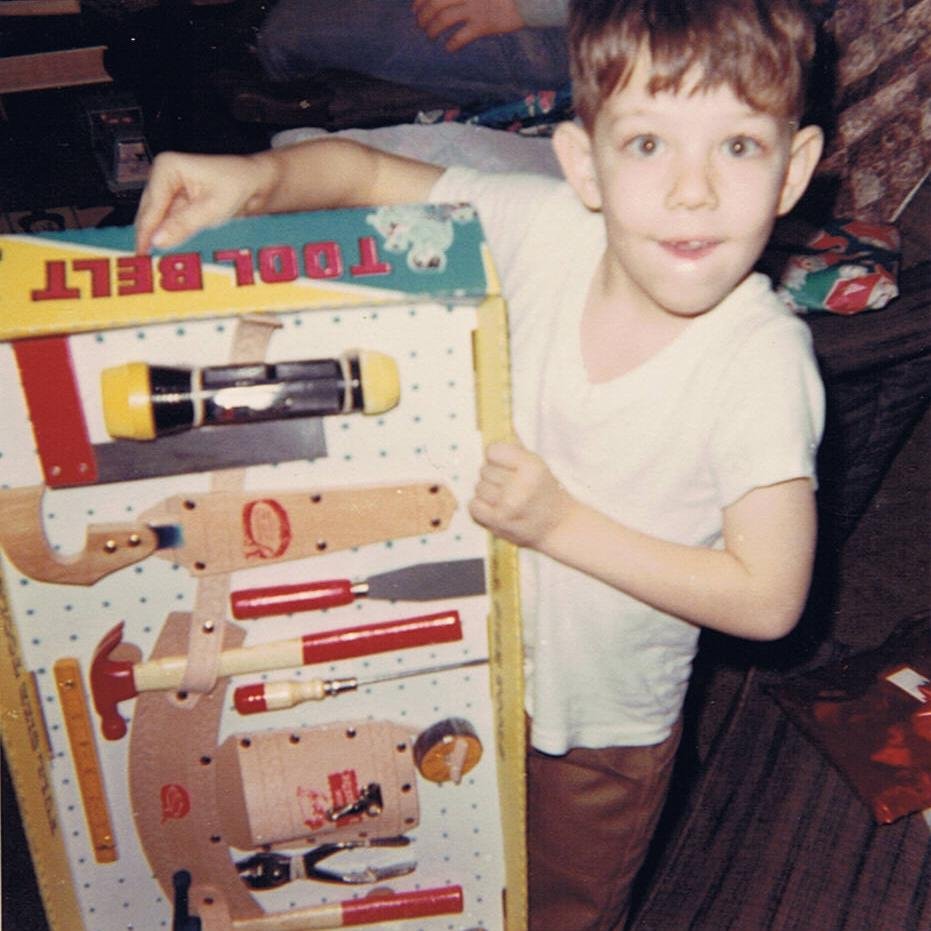
Attached is a photo of me at about seven or eight years old, grinning ear to ear, surrounded by real working tools and a fancy tool belt I received for Christmas. At the time, I didn’t know it, but that picture captured the essence of who I’d become, a lifelong troubleshooter. Back then, I worked with wood or fixed toys. Later, it would build a fort, go-cart, or furniture and fix furnaces, air conditioners, and eventually, human hearts.
My dad was an electrician and rebuilt electric motors. He had a knack for problem-solving, and I admired how he could take something that didn’t work and make it hum again. From him, I learned that every broken thing has a reason, and that patience and curiosity can uncover it. When he later became a pastor, I watched that same skill transfer from motors to people. He still wanted to fix things, just different kinds of wiring.
From my mom, I learned something my dad sometimes missed: emotional intuition. She could sense pain in others without needing words. Between the two of them, I inherited both a practical curiosity about how things work and a tender curiosity about why people hurt. That blend, more than any textbook, has defined my approach as a counselor and educator.
Like many who come to counseling later in life, I didn’t start here. My path wound through a series of jobs, paper routes, fast food, construction, HVAC, graphic design, apartment maintenance, even running my own print shop. Each chapter taught me something different about people: the pride of hard work, the humility of service, the frustration of burnout, and the joy of creation.
When my wife, Dawn, and I became parents and houseparent missionaries as a career, everything changed. For the first time, I wasn’t fixing machines; I was caring for children who had been neglected or abandoned. It wasn’t glamorous, but it was sacred work. And it set me on a path toward understanding behavior, pain, and healing at a deeper level. That experience eventually led to counseling, graduate school, and, over time, teaching others how to do the same.
Now, after decades in this field, I’ve learned that lived experience isn’t something you leave behind when you enter counseling; it’s the very thing that gives your counseling depth. Those who find this calling later in life often bring something powerful into the room: perspective. They know how hard life can be. They’ve failed, started over, raised families, lost loved ones, changed careers, and still believe people can grow.
Counseling, at its core, isn’t about having the right theory; it’s about seeing the whole person, just as you’ve had to see yourself through the many versions of your own life. Lived experience gives you the humility to listen and the courage to sit with someone else’s pain without needing to fix it too fast.
If you’re one of those people who came to this profession through the long road, know that your story isn’t a detour; it’s the foundation. Every job, every heartbreak, and every reinvention has been shaping your empathy, patience, and wisdom.
I guess I’ve always been a troubleshooter. These days, the tools look different: a pen instead of a wrench, empathy instead of a multimeter. But the work remains the same: find what’s broken, understand why, and help it come back to life.
Dr. Wesley